Doomsday Planning and Battlefield Graves: What the U.S. Military Is Preparing For
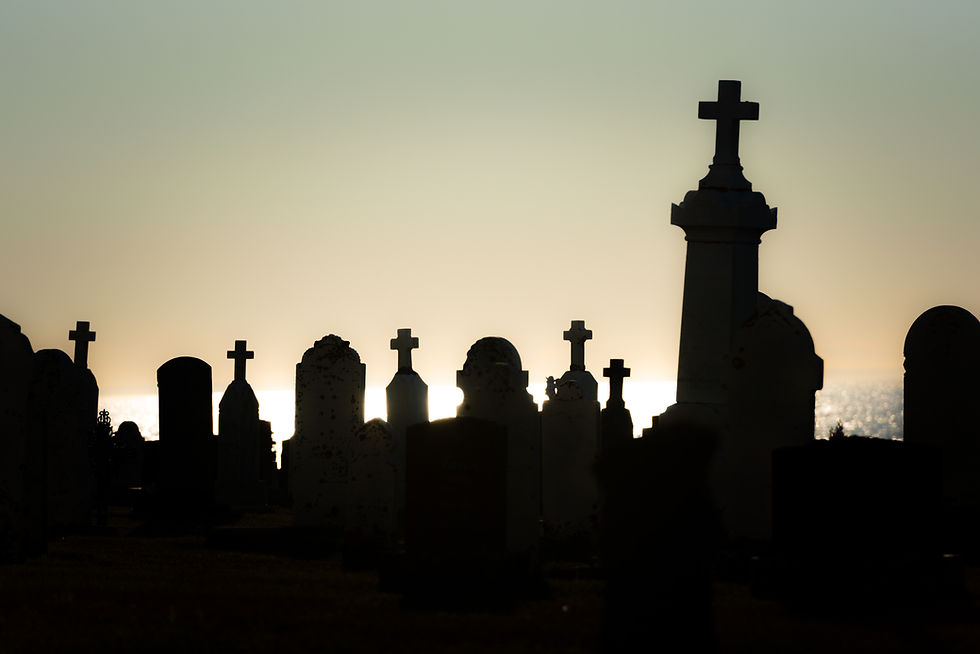
There are headlines that make you pause, and then there are headlines that make you think about everyone you love. A report about the Pentagon revisiting “Doomsday” preparations is unsettling enough. Add a report about American soldiers practicing how to dig mass battlefield graves, and the conversation becomes much harder to brush aside.
People want to know what these preparations mean. Is this responsible planning for terrible possibilities? Does it indicate a change in how military leaders view the next major conflict? And where does the public fit into a national security conversation that often sounds as though it is happening several rooms away from the people who could live with its consequences?
The reporting deserves attention. It also deserves precision. The sources reviewed for this article describe military preparedness, infrastructure resilience, and battlefield care for the dead. They do not establish that a particular catastrophic event is scheduled or imminent. Nor do they establish that the burial exercise and the Pentagon’s broader preparedness initiative are parts of one coordinated operation.
What Newsweek actually reported about battlefield graves
On October 29, 2026, Newsweek defense reporter Ellie Cook reported that Army units at Fort Bragg, North Carolina, practiced temporary battlefield burials for situations involving large numbers of military deaths. The participating units included the 3rd Corps Sustainment Command and 20th Engineer Brigade, with religious support personnel also involved.
The objective described was to preserve remains for identification and eventual return home when continued fighting and heavy casualties make prompt evacuation impractical. Newsweek reported that the Army had not needed such large-scale temporary burials since the Korean War.
The report described a standard plot accommodating 100 casualties across five trenches, and an estimated capacity of up to 2,400 temporary burials over 24 hours using specified heavy equipment. Those are exercise capacity figures, not a prediction of deaths. Newsweek quoted Sgt. 1st Class Delbert Ruede: “If we went to war tomorrow, we would be making this up as we went along.”
That distinction matters. A drill tests how an organization would respond under particular conditions. Its capacity figures describe the scenario being tested. They cannot, on their own, tell us the probability that those conditions will occur.
It also matters whom the report is discussing. This is reporting about fallen service members in a battlefield scenario. Describing it as proof that the Army is preparing graves for American civilians would introduce a claim the article does not establish. Likewise, describing the exercise as evidence of a planned domestic mass-casualty event would go beyond the reporting.
Where the Fox News “Doomsday” coverage fits
Fox News posted Jennifer Griffin’s video, “Pentagon revamping DOOMSDAY scenario plans,” on YouTube on October 27. A separate Fox News Digital report, dated October 25, described FORTRESS, an initiative intended to keep military installations functioning through severe disruption.
According to that report, major installations in the continental United States would be expected to sustain essential operations independently for at least 90 days. The planning covered electricity, water, fuel, and communications, along with reserves and alternative supply arrangements.
Fox reported that the initiative envisioned microgrids, battery storage, and portable nuclear reactors, as well as preparations for civilian manufacturing to support defense production during a crisis. Pentagon spokesperson Sean Parnell described the danger of relying on civilian infrastructure and framed the initiative as preparation for disruption during a major conflict.
These are reported objectives and planning measures. They are not evidence that every installation already meets the standard, or that a 90-day national blackout has been forecast.
Placed alongside the battlefield burial exercise, that reporting offers two different views of military preparedness: how forces would keep operating through disruption, and how they would handle deaths when evacuation systems could no longer keep pace. The subjects share a broad concern with the consequences of severe conflict. That shared concern does not demonstrate an operational connection between the programs.
What the White House has put in writing
There is also an official policy document worth reading directly. On May 23, 2025, President Donald Trump signed Executive Order 14299, “Deploying Advanced Nuclear Reactor Technologies for National Security.” It identifies energy disruption at defense facilities and other national security resources as a strategic risk.
The order directs the Defense Department, through the Army, to establish a nuclear energy program and commence operation of an Army-regulated reactor at a domestic military installation by September 30, 2028. Its stated rationale includes reliable power that can withstand external threats or grid failures.
That document predates the October 2026 reporting. It provides policy background for military energy resilience; it should not be presented as a new White House response to either the Fox video or the Newsweek article. An executive order setting a future deployment target also does not establish that the target has already been achieved.
The question beneath the frightening language
The uncomfortable part of this conversation is that preparedness can be necessary and disturbing at the same time. There is nothing reassuring about imagining a conflict in which bodies cannot quickly be brought home. There is nothing comforting about imagining an interruption severe enough that a military installation needs months of independent operations.
But refusing to think about those conditions would leave essential questions unanswered. What happens when a supply route is unavailable? What happens when a power system fails? What happens when the established process for returning fallen troops cannot keep up? The value of an exercise is that it can reveal weaknesses before people must depend on the response.
The analytical takeaway from these sources is that military planners are considering conditions in which familiar support systems may be unavailable. That is an interpretation of their stated preparedness goals. It is not an intelligence assessment about when or where the next conflict will happen.
Readers should be able to take the preparations seriously without being pushed toward certainty the evidence cannot support. Concern is reasonable. Questions are reasonable. Turning a conditional scenario into a countdown is a different step, and it requires evidence that these sources do not provide.
Military readiness also raises a civilian question
There is a public-interest question here that deserves more attention than the word “Doomsday” alone: if the government is examining how military operations would survive prolonged infrastructure disruption, what should communities understand about their own resilience?
That is a question about public policy, budgets, communication, and accountability. It is not a claim that a military initiative automatically supplies a civilian protection plan. The requirements of an installation and the needs of a neighborhood are different. Keeping essential military operations running does not, by itself, answer how households would receive trustworthy information or access necessary services during a prolonged emergency.
Officials can explain those boundaries. They can distinguish planning assumptions from threat warnings. They can identify what has been proposed, what has been funded, what has been tested, and what has actually become operational. Those distinctions help people understand preparedness without requiring them to interpret dramatic headlines as instructions.
There is also a practical fairness question. Any meaningful public conversation about resilience should account for people with limited money, limited transportation, caregiving responsibilities, or dependence on essential services. Telling the public to feel prepared is much easier than explaining how preparedness will be made accessible. That is an editorial concern raised by these reports, rather than a finding about the performance of any particular civilian emergency program.
The people behind the battlefield numbers
The burial portion of this story deserves particular care. It would be easy to repeat the largest number in the article until the human meaning disappears. But each person represented in that scenario would be someone with a name, relationships, a life, and people waiting for news.
That is why the distinction between a temporary battlefield burial and a permanent loss of identity matters so deeply. The stated purpose in the reporting is preservation and eventual return. Readers deserve to understand that purpose even while asking difficult questions about the conditions that would make such measures necessary.
Military families should not have to choose between wanting honest reporting and wanting respectful language. Both are possible. We can report on preparations for heavy casualties without treating hypothetical deaths as spectacle. We can ask whether systems are ready without suggesting that those deaths have already been decided.
What would justify a stronger conclusion?
If someone argues that these stories prove a particular war is about to begin, the next question is what evidence connects the preparations to that specific claim. An identified order, a documented operational change, or an attributable official assessment could change the reporting. Two serious headlines appearing in the same week do not establish that connection by themselves.
The same principle applies to claims about a nationwide blackout or a specific attack. A plan designed to function if something happens is evidence that the possibility is being considered. It is not automatically evidence that authorities know it will happen, or that they know a date they are withholding.
This does not require unquestioning trust in government. It requires consistency about evidence. Officials should face scrutiny for what they say, what they fund, and what they implement. Public commentary should face scrutiny when it converts uncertainty into a confident allegation.
For this story, the questions to keep following are concrete: what additional documentation becomes public, how the reported requirements develop, what exercises reveal, and how officials explain the relationship between military readiness and public resilience. Those are reporting questions that can produce answers. An undefined sense that everything must be connected cannot substitute for them.
What these preparations tell us—and what remains unknown
The verified material supports a serious conversation about readiness for severe disruption and the human costs of war. It does not settle the timing, likelihood, location, or outcome of a future catastrophe. It also does not establish that the two military activities examined here have a direct programmatic connection.
My view is that the public deserves more than either a frightening slogan or a dismissive reassurance. We deserve clear explanations of what is being prepared, why the preparation is considered necessary, and what the limits of that preparation are.
The responsible response is to keep asking those questions while preserving the difference between a documented action and an inferred motive. That gives readers something more useful than a moment of alarm: a way to understand the reporting, evaluate the next claim, and recognize when the evidence actually changes.
Shalena Speaks
Sources and reporting notes
This article combines attributed reporting with clearly identified analysis and commentary. No direct operational link between the burial exercise and FORTRESS was established by the sources reviewed. The White House order is historical policy context, not a verified response to the October reports.


Comments