Exercise (That Actually Works): Movement and Mindfulness for Urban Folks With Chronic Illness
- Shalena
- Dec 20, 2025
- 5 min read

Let's keep it 100, living with chronic illness in the city isn't a joke. Between the hustle and bustle, cramped apartments, and that never-ending grind, finding time and space to take care of your body feels damn near impossible. But here's the tea: you don't need a fancy gym membership or hours of free time to get your body moving and your mind right.
If you're dealing with lupus, fibromyalgia, arthritis, or any other chronic condition, you've probably heard the whole "just exercise more" speech from well-meaning folks who don't get it. We're not talking about that kind of exercise. We're talking about movement that actually works with your body, not against it.
The Real Deal: Why Your Body Needs This
Here's what most people don't tell you: 50 million U.S. adults are dealing with chronic pain lasting longer than three months. You're not alone in this struggle, bestie. And that pain? It's not just physical, it's messing with your stress levels, sleep, mood, and overall quality of life.
But here's where it gets interesting. Research shows that when people with chronic conditions practice mindfulness, their brain scans reveal less activity in the pain-processing areas. Translation? Your brain literally learns to handle pain differently. Some folks have even been able to cut back on their pain meds through consistent daily practice.
The combination of gentle movement and mindfulness isn't just feel-good fluff, it's science-backed relief that you can actually fit into your urban lifestyle.
Starting Small: Mindfulness That Fits Your Life
The Power of Just Breathing
You don't need a meditation cushion or a quiet mountaintop. You need about two minutes and the ability to breathe (which, thank goodness, you're already doing). Here's your starter pack:
Sit wherever you are right now
Breathe in slowly through your nose for a count of four
Hold it for two counts
Breathe out through your mouth for six counts
Focus on how your chest rises and falls
Do this while waiting for your morning coffee, sitting on the train, or even in a bathroom stall at work. Nobody needs to know you're getting your zen on.
Body Scan for Real People
This one's perfect for those nights when your body is screaming and your mind won't shut up. Lie down (or sit if lying down isn't happening today) and mentally check in with each part of your body, starting with your toes.
Don't try to fix anything, just notice. "Oh, my shoulders are tight." "My left hip is talking today." No judgment, no pressure to change it. Just awareness. This typically takes 10-20 minutes, but you can make it shorter when needed.
The 5-4-3-2-1 Grounding Technique
When anxiety hits or pain spikes, this technique pulls you back to the present:
5 things you can see
4 things you can touch
3 things you can hear
2 things you can smell
1 thing you can taste
This is clutch for crowded subway cars, overwhelming doctor's appointments, or those moments when everything feels too much.
Movement That Actually Makes Sense
Yoga That Doesn't Require Pretzel Skills
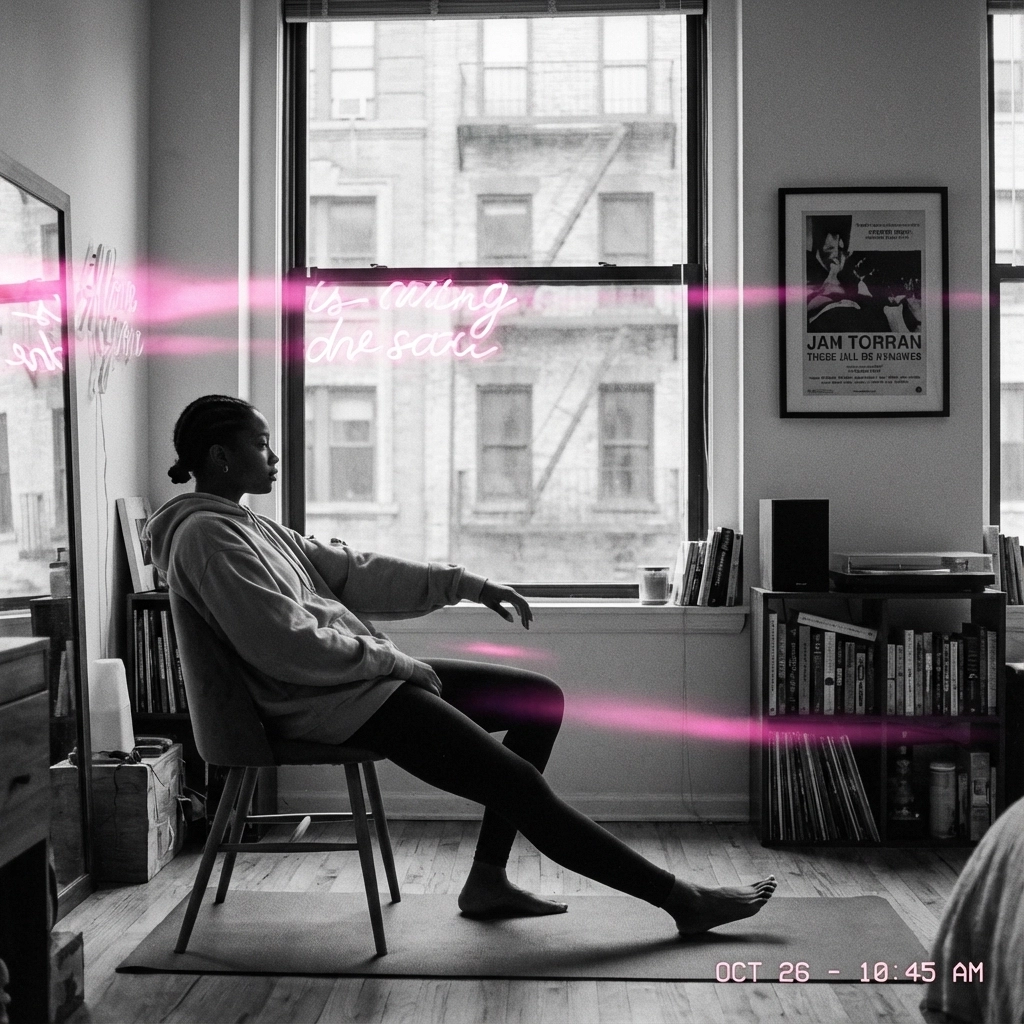
Forget what you've seen on Instagram. Real yoga for chronic illness looks like gentle stretching, modified poses, and listening to what your body needs today. Chair yoga is a thing. Bed yoga is a thing. Five-minute yoga is absolutely a thing.
Start with simple neck rolls, shoulder shrugs, or gentle spinal twists. The goal isn't to achieve perfect poses: it's to connect with your body and give it some love.
Walking Meditation: City Edition
You don't need a peaceful garden path. Find any space where you can take 10-20 steps: a hallway, a quiet street, even pacing in your apartment. Walk slowly and focus on:
How your feet feel hitting the ground
The rhythm of your steps
The sensation of movement in your legs
Your breathing as you walk
This practice transforms everyday movement into intentional healing time.
Gentle Stretching Routines
Create a 5-10 minute routine that targets your problem areas. This might include:
Gentle neck stretches for those who work at desks
Hip openers for people who sit a lot
Ankle circles and calf stretches
Gentle back extensions
The key is consistency over intensity. A little bit every day beats going hard once a week and being sore for the next four days.
Making It Work in Your Urban Reality
Habit Stacking for the Win
Pair your new practices with things you already do. This makes it easier to remember and stick with:
Deep breathing while your coffee brews
Gentle stretches while watching your morning news
Mindful breathing on your commute
Body scans while lying in bed before sleep
Use What You've Got
Your smartphone isn't just for scrolling. Download free apps like Insight Timer, Headspace, or Calm for guided meditations. YouTube has thousands of free gentle yoga and stretching videos. Your local library might even have meditation CDs you can borrow.
Find Your People
Check out community centers, chronic illness support groups, or online communities where you can practice with others who get it. Many neighborhoods offer free or low-cost gentle movement classes specifically designed for people with chronic conditions.
Building Habits That Actually Stick
Progress, Not Perfection
Some days you'll nail your routine. Other days, just breathing mindfully for 30 seconds while stuck in traffic counts as a win. Your chronic illness journey isn't linear, and your movement practice doesn't have to be either.
Listen to Your Body's Daily Report
Your energy and pain levels change daily. High-pain day? Maybe it's just breathing exercises and gentle neck rolls. Feeling stronger? Add in some walking or longer stretches. Your body is the expert: trust it.
Track the Real Wins
Instead of counting minutes exercised, track how you feel:
Did you sleep better?
Was your stress level lower?
Did you feel more connected to your body?
Were you able to handle a flare-up with more calm?
These are the victories that matter.
Your Urban Wellness Toolkit
Quick Fixes for City Life:
2-minute breathing exercises for subway delays
Desk stretches for long work days
Walking meditation during lunch breaks
Gentle yoga before bed in your small apartment
Mindful eating during rushed meal times
Emergency Self-Care: When symptoms spike, you've got tools:
Grounding techniques for anxiety
Gentle movement for stiffness
Breathing exercises for pain management
Body scans for overwhelming days
The Bottom Line
You don't need perfect conditions to take care of yourself. You don't need hours of free time, a big apartment, or expensive equipment. You need to start where you are, with what you have, for however long you can manage today.
Your chronic illness doesn't define you, but it is part of your story. Movement and mindfulness help you write that story with more ease, more self-compassion, and more control over how you respond to challenges.
Ready to start? Pick one technique from this post and try it today. Just one. Your future self will thank you for beginning, no matter how small that beginning might be.
For more wellness resources and support, check out our health and wellness section and connect with others on similar journeys in our mental health forum.
You've got this, and you're definitely not alone in this journey.
Comments