Living With Anxiety: When Your Mind Won't Turn Off
- Shalena
- Jan 8
- 8 min read

You know that feeling when it's 2 AM and your brain is still running like it's rush hour traffic? When you're laying there thinking about that text you sent three hours ago, tomorrow's meeting, whether you locked the door, and somehow that spirals into wondering if you're failing at life? Yeah, bestie: that's anxiety, and you're definitely not alone in this struggle.
Here's the tea: 40 million adults in the U.S. live with anxiety disorders, making it the most common mental health condition in the country. Yet somehow, when you're the one lying awake with your thoughts spinning like a washing machine on the fritz, it feels like you're the only person in the world dealing with this chaos.
Let's be real about what living with anxiety actually looks like: and more importantly, let's talk about what you can do about it.
What Does Anxiety Really Feel Like Day-to-Day?
Living with anxiety isn't just about feeling nervous before a big presentation. It's your mind treating every situation like it's a life-or-death emergency. It's checking your phone 47 times to make sure you didn't miss an important message. It's replaying conversations from 2019 and wondering if you said something wrong.
Your brain becomes this overprotective friend who means well but exhausts you with constant warnings: "What if this goes wrong? What if they don't like you? What if, what if, what if?"
Some days, anxiety shows up as that tight feeling in your chest when you're scrolling social media and comparing your behind-the-scenes to everyone else's highlight reel. Other days, it's the physical stuff: sweaty palms, racing heart, that queasy stomach feeling that makes you want to cancel all your plans.
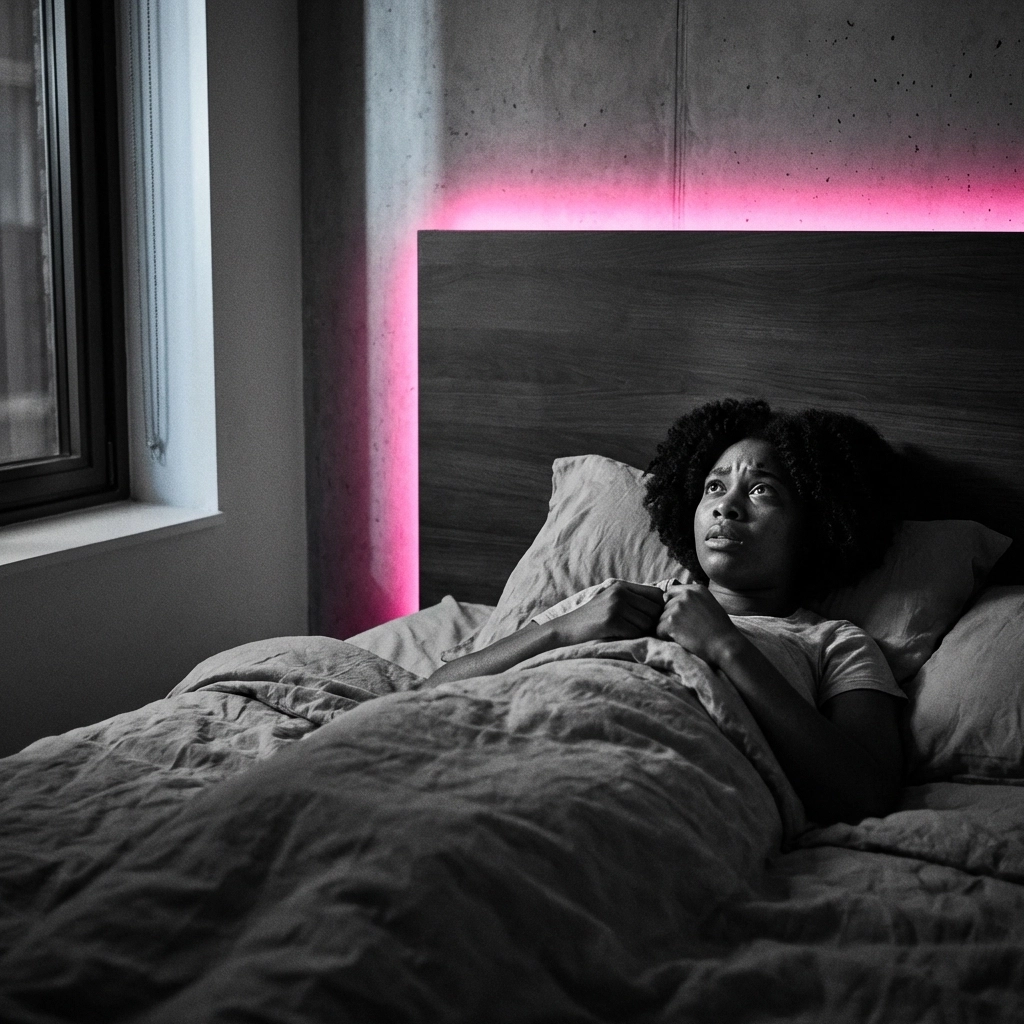
The hardest part? People can't see it. You might look perfectly put-together on the outside while your inner dialogue sounds like a group chat that won't stop pinging with worst-case scenarios.
How Urban Life, Racism, and Access Shape Anxiety
Quick facts to keep it 100:
Exposure to racism and microaggressions can keep your nervous system on "high alert," which looks like constant scanning and overthinking.
Access barriers are real: long waitlists, cost, transportation, or therapists who don't "get" your culture can delay care.
Community stressors like housing insecurity, neighborhood violence, or over-policing amplify baseline stress—even on "regular" days.
Stigma in some families or faith spaces can make it hard to speak up about anxiety, even when you're hurting.
None of this means you're "too sensitive." It means your brain is responding to context. Your experiences are valid, and there are tools and communities made for you.
Why Your Mind Won't Quiet Down (The Science Behind It)
So why does your brain act like it's running a 24/7 news cycle of things that could go wrong? Here's what's actually happening up there:
When you're anxious, your mind gets caught in what experts call "worry cycles." Anxiety triggers a flood of stress chemicals and worry-provoking thoughts that keep your nervous system on high alert. It's like your brain's security system is stuck on the highest setting, treating a text that says "we need to talk" like it's announcing a zombie apocalypse.
If you've had to deal with racism, safety concerns, or constant financial pressure, your brain's security system might be extra sensitive—because it learned to protect you.
Your mind races because anxiety literally rewires your thinking patterns. Every time you follow a worry down its rabbit hole, you're strengthening those neural pathways. It's like creating a mental highway that your thoughts automatically take, even when you don't want them to.
The good news? Just like you can train your body to get stronger, you can train your mind to get calmer. Recovery is absolutely possible with the right tools and support.
Immediate Techniques to Calm Your Racing Mind
When your thoughts are moving faster than your WiFi on a good day, you need some quick techniques to hit the brakes. Here are some that actually work:
The 5-3-8 Breathing Technique
This isn't your basic "just breathe" advice. Deep breathing exercises activate your parasympathetic nervous system, basically your body's built-in chill pill. Here's how to do it:
Breathe in through your nose for 5 counts
Hold it for 3 counts
Exhale slowly for 8 counts (this part is key!)
Do this at least three times, or whenever your mind starts spiraling. The longer exhale tells your nervous system it's safe to relax. Real-life remix: do it on the bus, in a rideshare, in the bathroom at work, or while waiting at a crosswalk—no one has to know.
Mindfulness (But Make It Simple)
Mindfulness is particularly effective for racing thoughts, but let's keep it real: sitting in silence for 20 minutes isn't always realistic when you're dealing with everyday life.
Try this instead: Pick something you can see right now and describe it in detail. The texture, color, shape: really focus on it. This pulls your mind out of future worries and past regrets and anchors it in the present moment. Urban edition: notice the pattern on a subway tile, the stitching on your jacket, the rhythm of a passing train, or a tree outside a window.
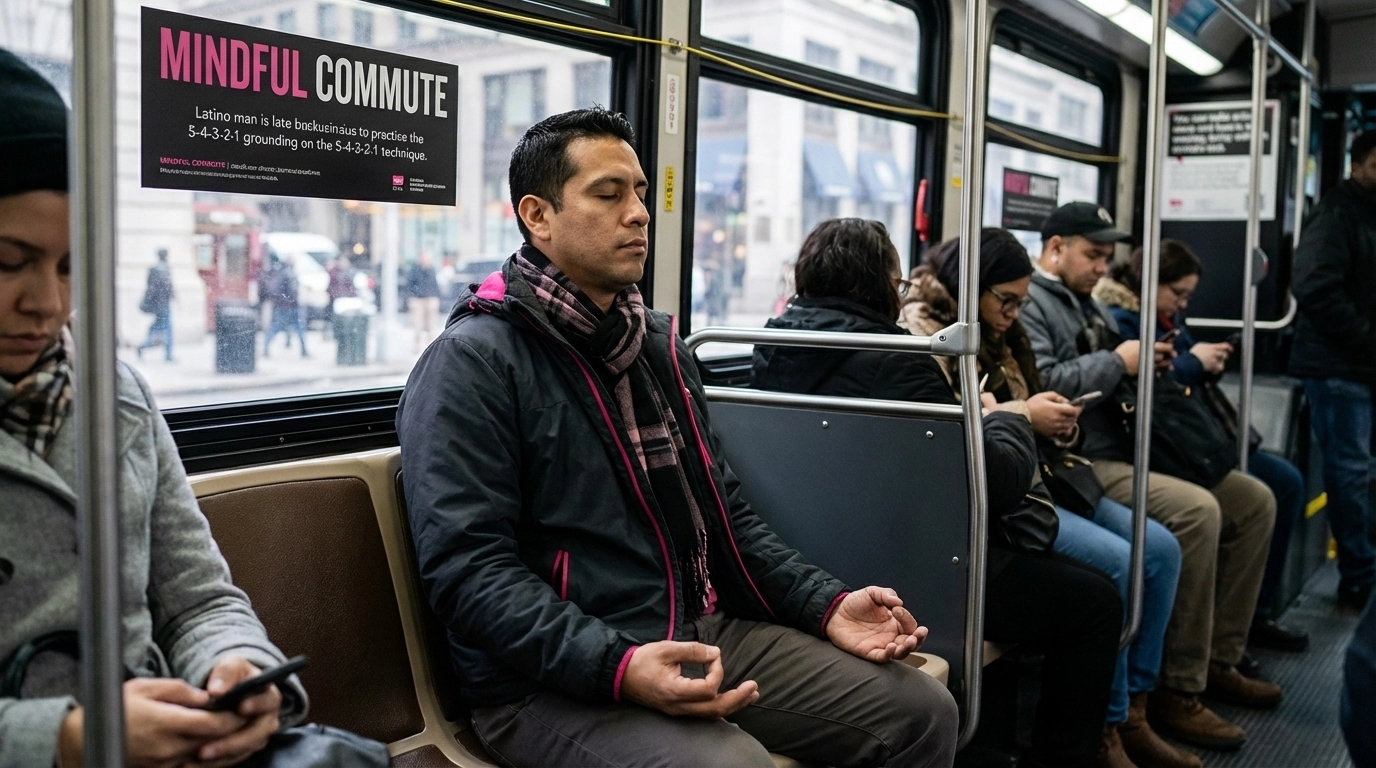
The 5-4-3-2-1 Grounding Technique
When anxiety has you feeling like you're floating in space, ground yourself by noticing:
5 things you can see
4 things you can touch
3 things you can hear
2 things you can smell
1 thing you can taste
This technique works because it brings your attention back to the present moment, unhooking you from unhelpful thoughts. Pro tip in public: do it quietly in your head or type it into your Notes app.
Addressing the Root: Changing Your Thought Patterns
Those racing thoughts aren't just random: they follow patterns. And here's some hope: Cognitive Behavioral Therapy (CBT) is the most effective form of psychotherapy for anxiety disorders. You don't even need to be in formal therapy to start using these techniques. If you've ever been stereotyped, profiled, or dismissed, of course the "what ifs" get louder—your nervous system is trying to keep you safe.
Reality-Check Your Worries
When your brain starts its "what if" marathon, ask yourself:
Is this thought helpful right now?
What evidence do I have that this will actually happen?
If this did happen, what would I actually do? (Spoiler: You'd figure it out.)
Am I mind-reading what others think about me?
Reframe the Narrative
Instead of "I'm going to mess this up," try "I'm prepared, and I'll handle whatever comes up." Instead of "Everyone thinks I'm weird," try "Some people vibe with me, some don't, and that's normal for literally everyone on earth." Culturally grounded reframes:
From "I have to code-switch perfectly" to "I can be myself and still be professional. If bias shows up, that's not on me."
From "If I set a boundary, people will call me difficult" to "Clear boundaries are how I protect my peace."

The goal isn't to become unrealistically positive: it's to become more realistic, period.
Lifestyle Changes That Actually Make a Difference
Your daily habits either feed your anxiety or starve it. Here's what can help your mind chill out:
Move Your Body (Seriously)
Exercise at least 3-4 times weekly isn't just good for your physical health: it literally burns off stress chemicals and releases natural mood boosters. You don't need to become a fitness influencer; even a 20-minute walk while listening to your favorite playlist counts. City-friendly moves: take the stairs, do a living-room dance session, try a YouTube workout, or join a free community class or walking group at a local park or rec center.
Check Your Caffeine and Nicotine Intake
That third cup of coffee might be making your racing thoughts even faster. Both caffeine and nicotine can worsen anxiety and fuel racing thoughts. If you're not ready to quit completely, try cutting back and see if you notice a difference. Swaps to test: half-caf, decaf, green or mint tea, or flavored sparkling water.
Prioritize Your Sleep Game
Poor sleep intensifies anxiety cycles like nothing else. When you're running on four hours of sleep, everything feels more overwhelming. Create a bedtime routine that helps your mind wind down: maybe that's reading, listening to music, or doing some light stretching. Night-shift or noisy block? Try blackout curtains, a fan or white noise app, and a consistent wind-down routine—even if your "night" is 10 AM.
Fuel Your Brain Right
Eating healthy foods like vegetables, fruits, whole grains, and fish gives your brain the nutrients it needs to function better. When you're anxious, it's tempting to reach for comfort food, but those sugar crashes can make anxiety worse. On a budget or in a food desert, do what you can: frozen veggies, canned beans and fish, oats, brown rice, eggs, and fruit on sale all count.
When to Seek Professional Help
Let's normalize getting professional support. You wouldn't try to fix a broken leg by yourself, so why try to handle anxiety completely alone?
Consider reaching out to a mental health professional if:
Your racing thoughts are interfering with work, relationships, or daily activities
You're avoiding situations because of anxiety
You're using substances to cope
You're having panic attacks
Sleep problems are becoming chronic
Psychological therapies like CBT are much more effective than medications in managing anxiety long-term, so definitely consider therapy as your primary approach. Many therapists offer sliding scale fees or work with insurance. If cost or access is a barrier, look for community mental health centers, Federally Qualified Health Centers (FQHCs), campus counseling, employer EAPs, and telehealth. It's also okay to filter for a culturally responsive therapist—someone who understands your background and lived experience.

Finding Your Support System
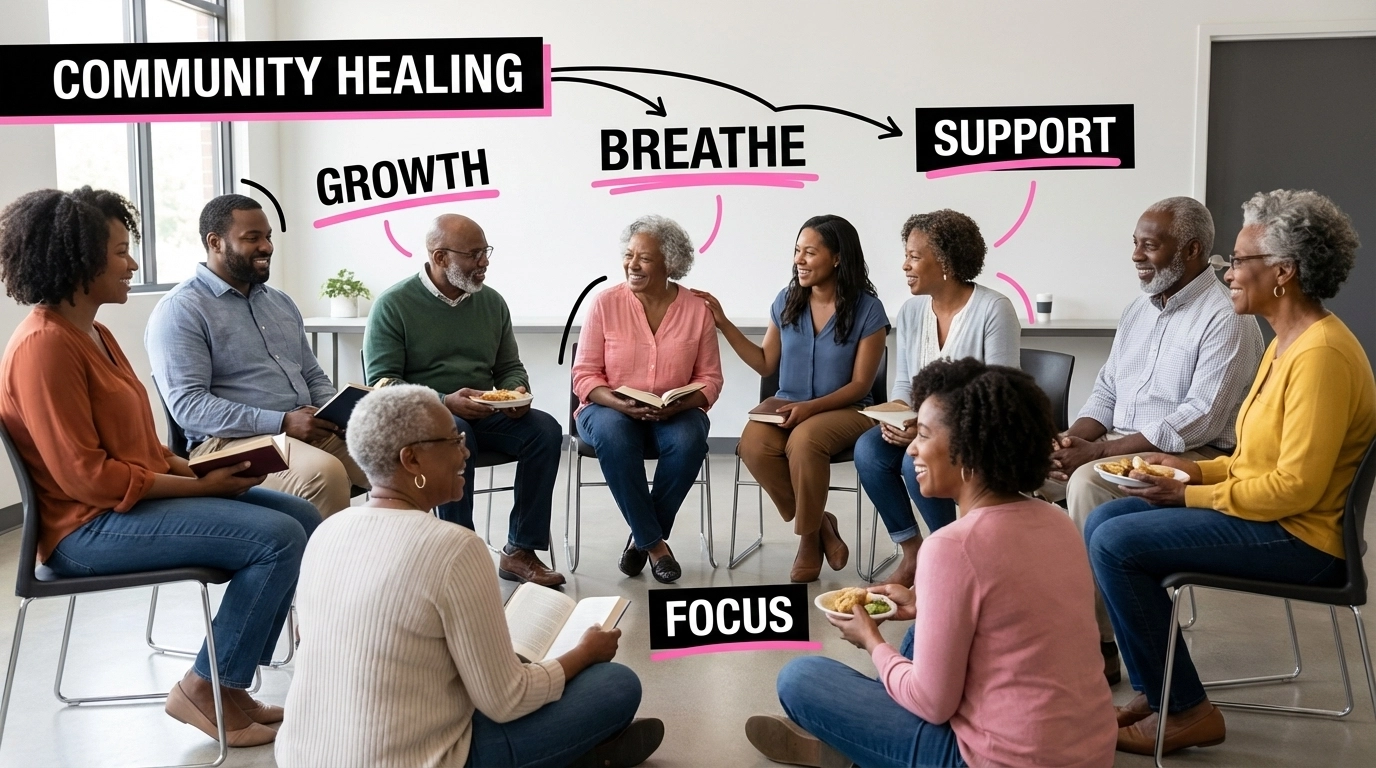
Healing happens in community. Whether that's friends, family, support groups, or online communities, you don't have to face this alone.
Think local and cultural: barbershops and salons, faith spaces and small groups, HBCU counseling centers, neighborhood orgs, group chats, and mutual-aid circles often host safe conversations and wellness resources. Consider joining support groups (both in-person and online), connecting with others who get it, or even checking out The Mental Health Hub in our community where real conversations about mental health happen without judgment.
Resources That Can Help
988 Suicide & Crisis Lifeline: Call or text 988 for 24/7 support
Crisis Text Line: Text HOME to 741741
National Alliance on Mental Illness (NAMI): Free support groups and resources; check your local affiliate
Psychology Today: Find therapists in your area who specialize in anxiety
Inclusive Therapists: Culturally responsive, social justice-oriented therapist directory
Therapy for Black Girls and Therapy for Black Men: Culturally centered therapist directories and content
Latinx Therapy: Directory and education for Latinx communities
National Queer & Trans Therapists of Color Network (NQTTCN): Mental health resources and directory
BEAM (Black Emotional and Mental Health Collective): Education and community-centered care
The Loveland Foundation and Boris Lawrence Henson Foundation: Therapy support programs for Black communities
Sista Afya (Chicago) and Coffee, Hip-Hop & Mental Health (Chicago): Community-centered mental health programs
Headspace or Calm apps: Guided meditations specifically for anxiety
SAMHSA National Helpline: 1-800-662-4357 for treatment referrals
Your city's 311 or local health department: Low-cost clinics and support groups
You're Stronger Than Your Anxiety
Here's what I want you to remember: Recovery is possible with appropriate treatment. Your racing mind doesn't define you: it's just one part of your experience that you can learn to manage.
You're not broken, you're not too much, and you're definitely not alone. Millions of people are figuring out how to live with anxiety and still create meaningful, joyful lives. Some of the most creative, empathetic, and resilient people you know are probably managing anxiety too.
Your mind might not turn off completely (and honestly, complete silence might be boring anyway), but you can definitely learn to turn down the volume. You can learn to respond to anxious thoughts instead of reacting to them. You can build a life where anxiety is just one voice in the choir, not the lead singer.
Take it one day at a time, one breath at a time, one technique at a time. You've got this, and when you don't feel like you do, remember: that's what community is for.
Your mental health matters, your experience is valid, and you deserve all the support and tools you need to thrive. Keep going, bestie. You're doing better than you think.
Comments