Digital Detox in a 24/7 City: How to Unplug Without Missing the Play
- Shalena
- 1 day ago
- 6 min read

Let's be real: you're reading this on your phone right now, aren't you? Maybe you've got three other tabs open, notifications are pinging in the background, and you just checked Instagram approximately 47 seconds ago. Welcome to life in a 24/7 city, where unplugging feels less like self-care and more like social suicide.
Here's the tea: the average person checks their phone 144 times a day. That's roughly once every ten minutes during waking hours. In a city that never sleeps, where the next event, opportunity, or viral moment could drop any second, putting down your device feels like voluntarily missing out on life itself. But what if I told you that staying constantly plugged in is actually making you miss the best parts of the play?
The Cost of Being "Always On" in the Concrete Jungle
Living in an urban environment means you're surrounded by constant stimulation. The city pulses with energy: restaurants drop new menus, pop-ups appear overnight, exclusive events sell out in minutes, and your entire social circle seems to be out living their best life while you're stuck in decision paralysis, scrolling through options instead of making moves.

But here's what nobody's talking about: that fear of missing out (FOMO) you're trying to avoid by staying glued to your screen? It's actually keeping you from being present for the moments that matter. You're at dinner with friends but checking Twitter. You're at a concert but watching it through your camera roll. You're physically in the city but mentally somewhere in the algorithm.
The mental exhaustion is real. You're overstimulated, overwhelmed, and somehow still feeling like you're not doing enough. Your brain wasn't designed to process this much information, this many options, this many curated highlight reels of other people's lives. And in a city where hustle culture is practically a religion, admitting you need a break from your devices feels like waving a white flag.
You Don't Have to Go Off the Grid to Get Your Peace Back
Here's the good news: a digital detox in a 24/7 city doesn't mean becoming a hermit or missing out on what the city has to offer. You're not moving to a cabin in the woods (though if that's your vibe, do you). Instead, it's about creating intentional boundaries with technology so you can actually experience the city instead of just documenting it.
Think of it like this: you wouldn't eat everything on every menu in your neighborhood all at once, right? You choose what nourishes you. The same applies to your digital consumption. It's not about disconnection; it's about connection with purpose.
Start small. Disable notifications that aren't essential. Do you really need to know the second someone likes your post or when that store you visited once is having a flash sale? Turn off those alerts and reclaim your attention. Your phone should serve you, not the other way around.
Strategic Unplugging: The Urban Edition
Create Tech-Free Zones in Your Space
Even if you're living in a studio apartment, designate certain areas as device-free sanctuaries. Your bedroom should be for sleep and intimacy, not infinite scrolling. Create a charging station outside your bedroom and commit to it. That cozy reading corner by the window? Make it a phone-free zone. These physical boundaries train your brain that not every space requires digital access.

Time-Block Your Connectivity
Instead of being passively available 24/7, set specific times to check emails and social media. Maybe it's 9 AM, noon, and 6 PM. Outside those windows, the apps are closed. This isn't about being unreachable: it's about being deliberate. Your group chat will survive if you don't respond within 30 seconds, I promise.
Start Your Day Screen-Free
The first hour after you wake up sets the tone for your entire day. If the first thing you do is scroll through news, emails, and everyone else's morning routine, you're letting external noise dictate your mental state before you've even had coffee. Try starting with movement, meditation, journaling, or just sitting with your thoughts while you make breakfast. Radical concept, I know.
Embrace the City Without the Screen
Here's where it gets good. Your city is full of experiences that are better without a phone in your hand. These aren't Instagram moments: they're actual moments.
Cultural Immersion is the Move
Take a cooking class in your neighborhood. Hit up that museum exhibit you've been meaning to see (and actually look at the art instead of photographing it for the 'gram). Catch a live show: comedy, music, theater, poetry slam, whatever speaks to you. These experiences demand your full attention and presence, making devices naturally fade into the background.

When you're learning to make handmade pasta from a chef who's been perfecting the craft for 40 years, your phone suddenly feels irrelevant. When you're watching a musician pour their soul into a performance three feet away from you, scrolling Twitter seems ridiculous. The city offers endless opportunities to be fully present: you just have to choose them over the screen.
Walk With Purpose (And Without Your Phone)
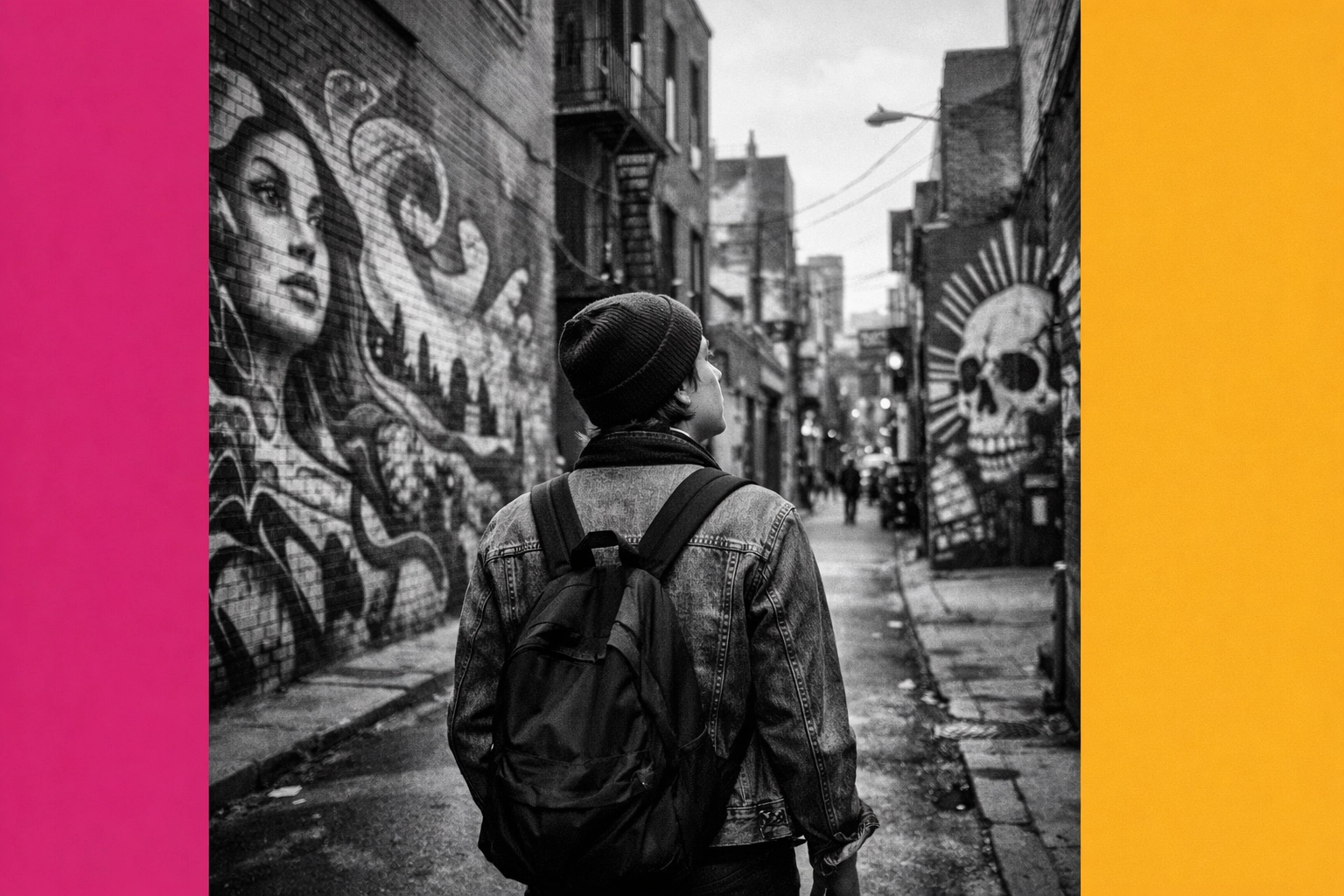
Explore your neighborhood like a tourist. Leave your phone at home or turn it on airplane mode. Notice the murals you've walked past 100 times. Check out that coffee shop you've never been to. Talk to your neighbors. Let yourself get a little lost and find a new favorite spot.
Small challenges work: try going 30 minutes without checking your phone. Then build up to an hour. Then a whole afternoon. Research shows that once you experience the mental clarity that comes from being offline, you'll actually want to maintain those boundaries. Your brain will thank you.
Managing FOMO: The Real Flex
Let's address the elephant in the room: what about FOMO? What if you miss that last-minute rooftop party invite or that exclusive event everyone will be talking about tomorrow?
Real talk: most of what you think you're missing out on isn't actually worth your mental peace. The truly important people will reach you. The genuinely valuable opportunities will still be there. And that viral moment everyone's talking about? You'll hear about it eventually, and your life won't be less rich for experiencing it a few hours later.
The ultimate flex isn't knowing everything happening in real-time. It's being so secure in yourself and your choices that you don't need constant validation from your timeline. It's choosing quality experiences over quantity of options. It's living your life instead of watching everyone else perform theirs.
Besides, you know what creates actual FOMO? Posting about an experience you barely remember because you were too busy documenting it. Being at dinner but not really being there. Having a phone full of photos but a life full of moments you only half-experienced.
Building Boundaries That Actually Stick
Sustainable digital boundaries in a city environment require more than good intentions. They require systems.
Use Your City's Built-In Alternatives
Parks. Coffee shops. Walking routes. Community events. Free concerts. Public libraries. Art galleries. Farmers markets. Your city is full of spaces designed for human connection and experiences that naturally replace screen time. The key is scheduling them like you would any other commitment.
Put "Sunday morning park walk" on your calendar. Make Tuesday evening your tech-free dinner night. Join a book club that meets monthly. Create structure around unplugging so it becomes a habit, not a sacrifice.
Accountability Matters
Tell your people about your digital boundaries. Let your close friends know you're checking your phone less frequently and why. Real ones will respect it. Better yet, invite them to join you. "Phone stack" at dinner (everyone stacks their phones in the center; first person to reach for theirs pays). Weekend tech-free hangs. Group activities that don't involve screens.
The Bottom Line
Digital detox in a 24/7 city isn't about rejecting technology or pretending you don't live in a hyper-connected world. It's about managing temptation instead of being managed by it. It's about using your city's energy to fuel real experiences instead of just curating digital ones.
Your mental clarity is worth more than being first to comment on every post. Your peace of mind is worth more than keeping up with every trend. Your actual life: the one you're living in real-time, in this incredible city: is worth experiencing fully.
So here's your challenge: pick one small digital boundary to implement this week. One tech-free zone. One screen-free activity. One morning without immediately reaching for your phone. See how it feels. Notice the mental space that opens up. Pay attention to what you gain, not what you're "missing."
Because here's the truth: the city isn't going anywhere. The experiences aren't disappearing. But your ability to be present for them? That's slipping away with every mindless scroll.
It's time to unplug so you can plug back into yourself. The play is happening right now, and you're the main character. Stop watching everyone else's story and start living yours.
Looking for more resources on protecting your mental health in the urban hustle? Check out our Mental Health Resources for tools and support.

Comments