Anxiety Fatigue: Being Tired From Worrying All the Time
Updated: Jan 10
Quick fact: about 1 in 3 adults in the U.S. report anxiety symptoms in a given week - and in many urban zip codes, that stress runs even higher. For Black and Brown communities, the load often feels heavier thanks to rising costs, hustle culture, and the pressure to always be "the strong one."
Y'all, can we talk about something real for a minute? That bone-deep exhaustion you feel after your brain has been running marathons all day long - even when your body hasn't moved from the couch? That's anxiety fatigue, and bestie, you're not imagining it.
If you've ever felt like you need a nap after a full day of worry, or wondered why you're more tired than someone who ran a 5K when all you did was overthink every text message you sent today, this one's for you. Between doomscrolling, side-hustle juggling, and trying to keep up with rent, safety, and career goals, your mind's been clocked in for a double shift. Let's break down what's really happening when your mind won't turn off and your body pays the price.
What Is Anxiety Fatigue? (And Why It Hits Different)
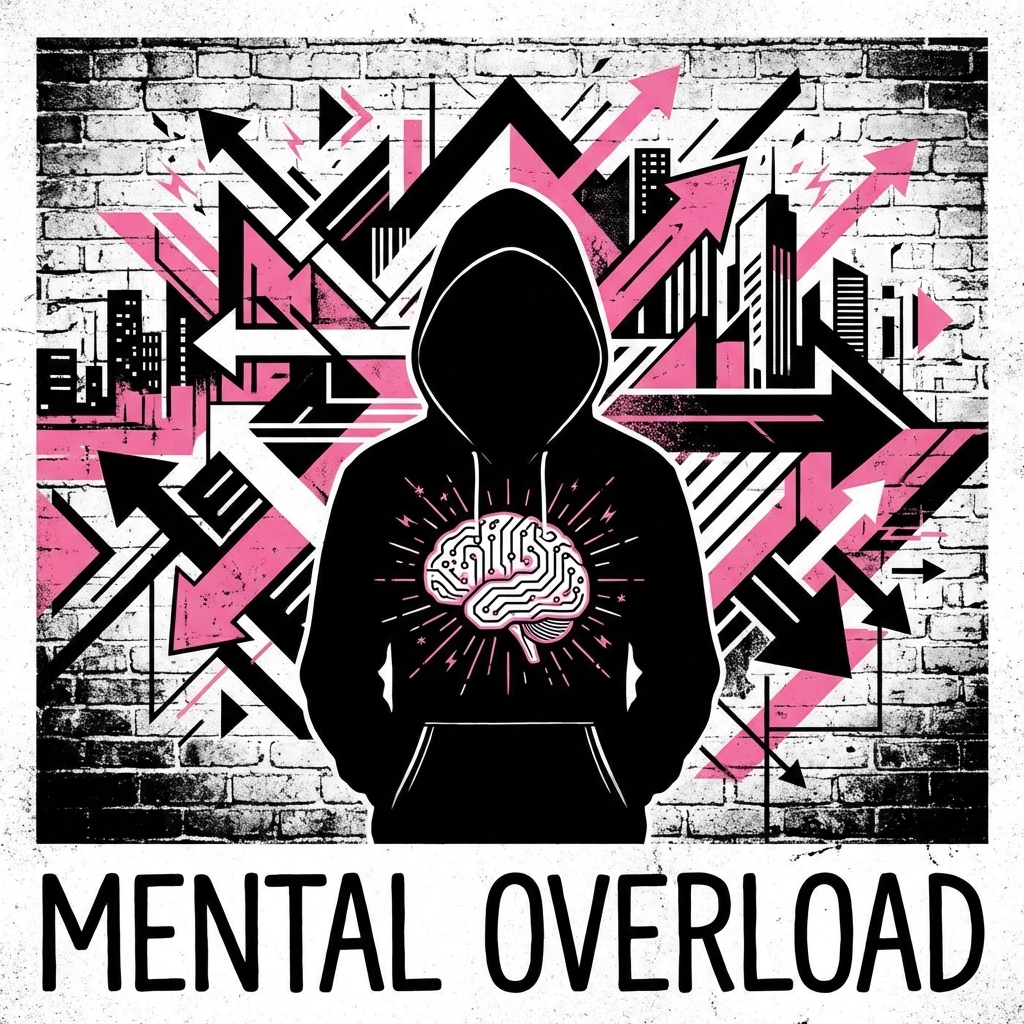
Here's the tea: anxiety fatigue isn't just being "a little tired." It's that deep, overwhelming exhaustion that comes from your brain being stuck in overdrive 24/7. Think of it like having 47 browser tabs open in your mind at all times: eventually, your whole system starts to lag.
When you're dealing with chronic worry, your body thinks it's constantly under threat. Your nervous system stays activated, pumping out stress hormones like it's preparing you to run from a lion, except the "lion" is actually your thoughts about that work presentation next week or wondering if your friend was being passive-aggressive in their last text.

The wild part? Your body can't tell the difference between a real threat and an imagined one. So whether you're actually being chased or just lying in bed at 2 AM spiraling about your finances, your system responds the same way: and that response is exhausting.
Why It Hits Different in Urban Life: Stress, Generational Pressure, and Stigma
Research shows Black and Latino communities are less likely to receive mental health care despite similar or higher need. Layer that with city life and, whew, the fatigue hits different.
Urban stress you can't just "opt out" of: rent spikes, long commutes, neighborhood safety, police sirens, unpredictable shifts, and the "always on" algorithm. Your nervous system stays on high alert, which drains your energy fast.
Generational pressure: being first-gen everything, sending money home, translating for family, code-switching, and the "be twice as good" rule. You're carrying your dreams and your people's hopes - no wonder your mind never clocks out.
Community stigma and access barriers: "pray it away," "don't tell our business," fear of being seen as "weak," plus fewer culturally responsive providers and cost/time walls. When help feels out of reach, anxiety grows - and so does the fatigue.
Sound familiar? Naming what's wearing you down is the first step to taking your energy back.
The Science Behind Why Worry Wears You Out
Let's get into what's actually happening in your body when anxiety takes over:
Your fight-or-flight mode is stuck on "on" When anxiety kicks in, your sympathetic nervous system activates faster than your favorite song coming on shuffle. Your heart rate jumps, your breathing gets shallow, and your muscles tense up. Imagine holding a plank position for hours: that's what chronic anxiety does to your entire body.
Sleep becomes mission impossible Racing thoughts don't clock out at bedtime. If your mind is running through tomorrow's to-do list, replaying that awkward conversation from three days ago, or creating worst-case scenarios for situations that probably won't even happen, quality sleep isn't happening either. And poor sleep? That's a direct pipeline to feeling drained the next day.
Your brain is working overtime Constant worry is like having your brain on a hamster wheel that never stops spinning. All that mental energy spent on "what if" scenarios, analyzing every possible outcome, and trying to control things that are honestly out of your hands? That's mentally exhausting work, and your brain needs recovery time just like your body does after a workout.
Recognizing the Signs: More Than Just Being "Tired"
Anxiety fatigue shows up in ways you might not expect. Sure, there's the obvious exhaustion, but it can also look like:
Brain fog that makes you feel like you're thinking through molasses - Simple decisions become overwhelming, and concentrating feels impossible
Physical heaviness - Your limbs feel like they're made of concrete, and even getting up to grab water feels like a major task
Mood swings that come out of nowhere - You're irritable, emotional, or just flat-out over everything
Muscle tension and headaches - Your shoulders are permanently hunched, and your head throbs from all that mental strain
Loss of motivation - Things you usually enjoy feel like too much work, and your get-up-and-go got up and left
If you're reading this like "Wait, that's exactly how I feel," you're not alone, and you're definitely not making it up.
From Our Readers: Black and Brown Perspectives
Week after week, our DMs and inbox fill up with stories that echo the same themes: money stress, safety worries, family expectations, and the pressure to perform without cracking. Here are a few perspectives from our community:
Maya, 29, Philadelphia: "I juggle two jobs and send money to my mom. By the time I get home, my brain is loud but my body is done. I thought I was lazy for needing to nap in my car before my night shift. Turns out it's anxiety fatigue - my mind never feels 'off.'"
Javi, 34, Bronx: "First-gen in tech sounds glamorous, but being 'the rock' for my family while pretending I'm fine at work? I do breathing exercises in the stairwell between standups because I literally forget to exhale until my paycheck clears."
Aaliyah, 22, Chicago: "When I told my roommate I was trying therapy, she laughed. My aunt said, 'pray it away.' I found a counselor of color on campus and learned grounding. My GPA went up because I finally slept."
Your story matters. If you're comfortable, share your perspective in our Mental Health Hub or join the convo in our forum. The more we speak up, the less the stigma stands a chance.
Coping Strategies That Actually Work
Now for the good news: there are real ways to manage anxiety fatigue that don't require you to completely overhaul your life overnight:
Set boundaries with your worry time I know this sounds weird, but try scheduling your worry. Give yourself 15-20 minutes a day to think through your concerns, write them down, and problem-solve what you can. When anxiety thoughts pop up outside that time, remind yourself you'll address them during your designated worry window.
Master the art of the brain dump Before bed, write down everything swirling in your head: tomorrow's tasks, random worries, that thing you forgot to do three weeks ago. Getting it out of your mind and onto paper can help your brain actually rest.
Practice grounding techniques When you feel that anxiety spiral starting, try the 5-4-3-2-1 technique: name 5 things you can see, 4 things you can touch, 3 things you can hear, 2 things you can smell, and 1 thing you can taste. It pulls you back to the present moment and out of that future-focused worry loop.
Move your body, even when you don't want to I'm not talking about running a marathon here. Sometimes it's just stretching in bed, dancing to one song, or taking a walk around the block. Movement helps burn off those stress hormones and can actually boost your energy.

Create a wind-down routine Your transition from day to night needs to be intentional. Maybe it's a warm shower, some calming music, or reading something light. Give your nervous system clear signals that it's time to shift gears.
When Professional Help Makes All the Difference
Real talk: sometimes self-care strategies aren't enough, and that's completely okay. If anxiety fatigue is impacting your ability to work, maintain relationships, or just enjoy your life, it might be time to bring in backup.
Therapy, especially cognitive behavioral therapy (CBT), can help you identify and change thought patterns that fuel anxiety. Medication might also be an option worth discussing with a healthcare provider if your symptoms are severe or persistent.
Don't let anyone make you feel like seeking professional help is a sign of weakness. Managing anxiety takes courage, and sometimes the bravest thing you can do is ask for support.
Building Your Support Network
You don't have to handle this alone, and honestly, you shouldn't try to. Here's how to build a solid support system:
Find your people Whether it's friends who get it, family members you trust, or online communities where you can share your experience without judgment, connection matters. If you're looking for a safe space to discuss mental health challenges, our Mental Health Hub is a great place to start.
Educate your inner circle Help the people closest to you understand what anxiety fatigue looks like for you. When they know that you're not just "lazy" or "making excuses," they can offer better support and check in on you in meaningful ways.
Set realistic expectations Some days you're going to have more energy than others, and that's normal. Be honest with yourself and others about what you can handle on any given day.

Resources That Can Help Right Now
Crisis Support:
National Suicide Prevention Lifeline: 988
Crisis Text Line: Text HOME to 741741
Mental Health Resources:
National Alliance on Mental Illness (NAMI): nami.org
Anxiety and Depression Association of America: adaa.org
Psychology Today therapist directory: psychologytoday.com
Apps for Daily Support:
Headspace or Calm for guided meditation
Sanvello for anxiety and mood tracking
PTSD Coach for grounding techniques
You're Not Broken, You're Human
Here's what I need you to remember: feeling exhausted from anxiety doesn't make you weak, dramatic, or broken. It makes you human. Your nervous system is trying to protect you the only way it knows how, even when that protection feels more like punishment.
Recovery isn't linear, and healing takes time. Some days you'll feel like you're making progress, and other days you might feel right back where you started. Both experiences are valid and part of the process.
If you're struggling with anxiety fatigue, join the conversation in our forum where you can connect with others who truly understand what you're going through. Sometimes knowing you're not alone in this experience can be the first step toward feeling better.
You deserve rest, peace, and energy to live the life you want. Don't let anyone: including yourself: convince you otherwise. Take it one day, one breath, one small step at a time. You've got this, and we've got your back.


Comments